Blog
Oct. 26, 2026
Share:
In optical, laser inspection and vision equipment industries, packaging engineers often raise one key question: Can EPP packaging adopt zoned cushioning to protect fragile parts such as lenses?
Optical lenses, coated glass and sensor chips are the most vulnerable components. Scratches, chipping and coating peeling may occur under local compression or impact, while metal bases and main frames need stable support to avoid sagging under stacking load. Traditional foam solutions, including cut-and-glued EPE, EVA or single-density EPP, can only use uniform hardness, which creates a conflict: softer foam cannot hold the whole unit steadily, while stiff foam leaves lenses with insufficient cushioning margin.
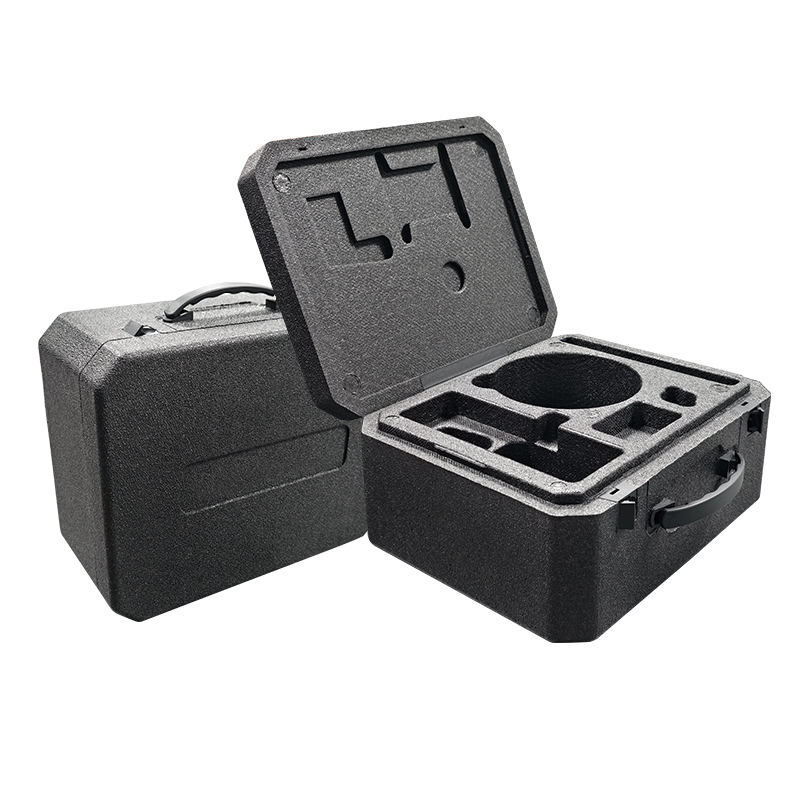
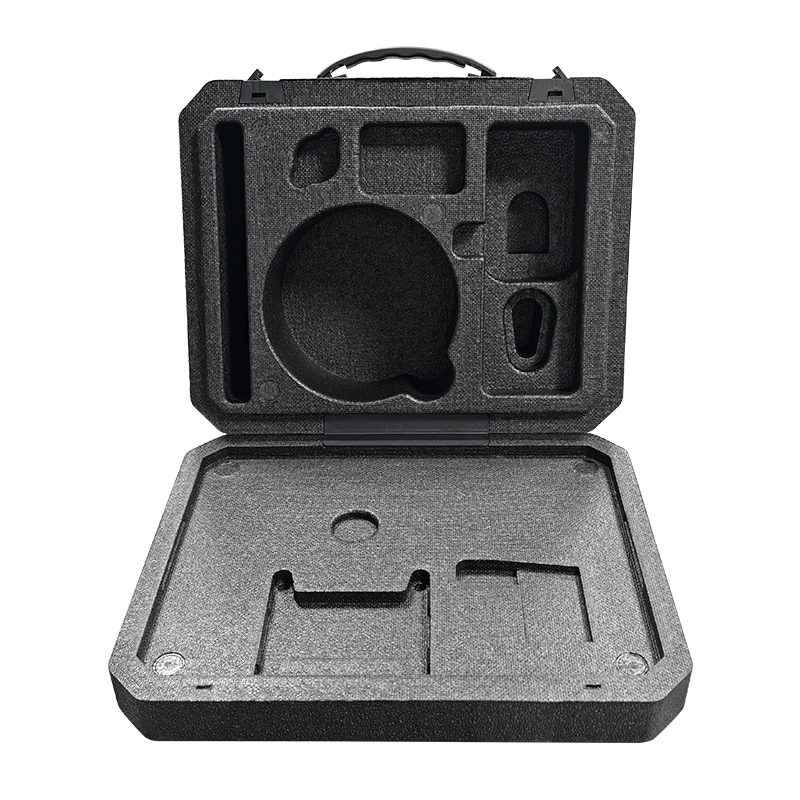
The answer is yes. EPP supports zoned cushioning via multi-density molding. Within one single molded EPP package, different zones can be assigned EPP beads of different expansion ratios, delivering customized protection for individual components.
The design principle is straightforward: according to component weight, fragility and stress distribution, separate material cavities are set inside the mold. High-density EPP is used for heavy metal frames to resist stacking pressure and permanent creep. Low-density high-resilience EPP is arranged around lenses and optical windows, with longer compression stroke to absorb impact energy and limit peak acceleration transmitted to fragile optical surfaces. The whole package is integrally molded without glue or secondary assembly. Mold texturing can also be applied to eliminate dust risk for cleanroom workshops.
It is worth distinguishing integrated multi-density molding from simply gluing different foam blocks together. Bonded composite foam has weak interfaces, prone to separation and accumulated tolerance. In contrast, one-shot molded multi-density EPP forms continuous structure, keeps tight dimensional consistency and retains stable cushioning after dozens of vibration and drop cycles for sea freight and factory circulation.
Nevertheless, zoned cushioning EPP brings higher technical thresholds for mold and process control. First, the mold requires separate feeding ports and carefully designed venting and runner layout, with DFM review in advance to avoid short shots and obvious knit lines on low-density zones. Second, steam parameters for different EPP grades need independent tuning, to ensure the compression curve matches simulation targets instead of empirical trial only. Third, reliability tests should cover local impact on lens zones instead of overall qualification only. Improper mold design will lead to poor yield and molding defects.
Zoned multi-density EPP is not mandatory for all precision instruments. Single-density EPP works well for light and simple equipment. The value of graded cushioning stands out mainly when one device combines heavy rigid frames and brittle optical glass. Anti-static EPP can also be arranged selectively for circuit zones while lens areas remain dust-free standard EPP.
Zoned EPP packaging can be developed synchronously with textured EPP outer boxes for matched tolerance control. It fits automated handling and cleanroom workflows and can be reused more than 50 times to support ESG requirements.
Q1: Will different density zones split easily?
A: Proper one-shot molding fuses EPP beads across zones instead of adhesive bonding. Well-validated parts resist separation under cyclic impact, depending on mold feeding and steam process.
Q2: Will low-density lens zones flatten permanently?
A: Closed-cell EPP features good resilience. When density and cushion stroke are validated by drop tests, its performance degrades far slower than EPE foam. Low-density zones are designed to avoid continuous static heavy load.
Q3: Does multi-density EPP take longer for sampling? A: DFM and mold work are more complex than single-density designs. Normal lead time is 7–10 days; rush service is available for simple zoning layouts. Q4: Can zoned EPP be textured for dust-free use?
A: Yes. Uniform mold etching delivers matte surface without film or paint coating for cleanroom applications.
Optical packaging design is essentially controlled energy management, not simply choosing harder or softer foam. Zoned cushioning EPP gives packaging engineers finer tuning for protection. Fumei New Materials, with in-house mold workshop, develops graded cushioning EPP and textured EPP boxes for optoelectronic and testing equipment, supported by drop and vibration reliability verification.