Blog
Oct. 27, 2026
Share:
Tightening export environmental regulations and regular downstream ESG audits are reshaping packaging strategies across the precision manufacturing sector. For high-value optical, laser and inspection instruments, conventional single-use EPE, EPS and glued EVA foams become waste after one shipment, creating large solid waste volumes and risks during supplier audits. Against this backdrop, integrally molded EPP packaging gains traction for its sustainable performance across the whole product lifecycle.
EPP, expanded polypropylene,, naturally suited for closed-loop recycling, unlike EPS which is hard to reclaim and has low recycling value. Its core sustainability strength lies in repeated circulation. Thanks to excellent creep resistance and stable resilience, qualified EPP packaging retains its cushioning structure after repeated drop and vibration cycles. Normally it can be reused more than 50 times, up to 80–100 cycles under proper maintenance. One set of boxes can circulate between workshops, branch sites and overseas customers, drastically cutting consumption of disposable foam and cartons. This benefit is especially obvious for equipment rental, after-sales repair and recurring calibration shipments.
EPP also features clean material composition and low pollution during production and application. It is formed by physical steam molding without CFC blowing agents and releases little VOC. Virgin EPP beads are single-component material, free of adhesive glue or multi-layer composite coatings commonly found in bonded EVA foam. Textured EPP boxes with mold-etched surface patterns require no film lamination or spray finishing. Dust risk is eliminated for cleanroom optical workshops while reducing chemical post-treatment. The material is non-toxic and odor-free, compliant with RoHS and REACH for export. At end-of-life, it burns mainly into CO₂ and water without toxic fumes.
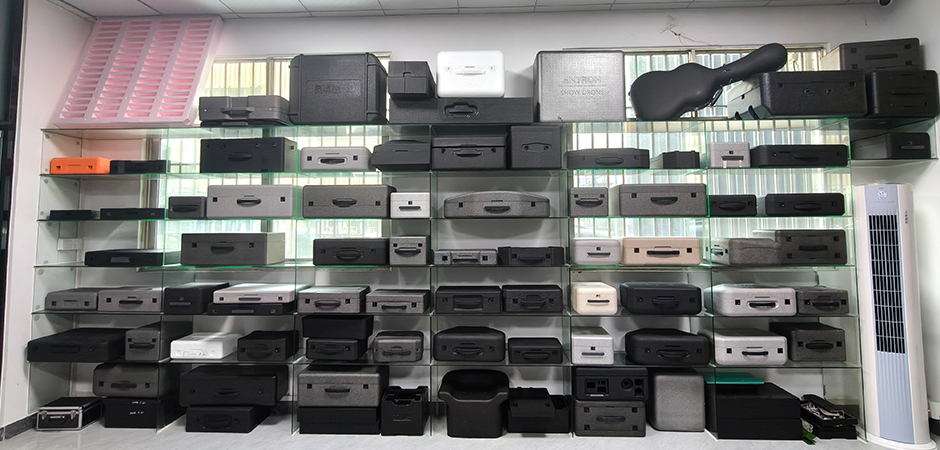
Lightweight design brings extra carbon savings. EPP’s cellular structure keeps packaging weight low compared with rigid plastic crates. Lighter packaging reduces payload weight and fuel consumption during land and sea freight, lowering embodied carbon for manufacturers with long-distance export logistics.
When the service cycle ends, EPP is 100% recyclable. Used EPP boxes can be shredded and re-pelletized for new EPP beads, closing the material loop. This makes it far easier to implement take-back schemes and EPR compliance compared with hard-to-sort EPS foam.
It is important to keep an objective view: material selection depends on application scenarios. Disposable EPE/EVA remains cost-effective for short-run one-off shipments. The sustainability return of EPP is realized over multiple reuse cycles. To maximize its green value, packaging designers should prioritize uniform stacking geometry and single-material construction, avoiding mixed foreign components that complicate sorting.
Multi-density zoned EPP for lens protection also aligns with circular goals. Different foam ratios are molded in one single piece, delivering soft cushioning for fragile optical parts and rigid support for main frames, without stacking dissimilar foam layers that hinder recycling.
Q1: Will repeated reuse degrade EPP and weaken its environmental benefits?
A: Virgin EPP features good fatigue resistance. Performance degrades slowly with proper handling. Even worn units can still be recycled into new raw materials instead of going straight to landfill.
Q2: Is EPP packaging acceptable for EU export environmental compliance?
A: Single-component EPP meets RoHS and REACH standards and fits EU packaging waste rules, supporting green supplier assessments for optoelectronic and testing equipment.
Q3: Does mold texturing prevent EPP from being recycled?
A: Texture is only a surface feature. The substrate remains pure polypropylene without coating or lamination, so it can still be shredded and recycled normally.
Q4: How do brands calculate carbon savings versus disposable foam?
A: Savings are calculated by total circulation cycles, waste disposal cost and shipment frequency. The more reuses, the lower carbon footprint per delivery.
As precision manufacturing pushes for decarbonization, packaging is no longer only about shock protection. A well-designed reusable EPP package protects valuable instruments while serving as tangible evidence for ESG reporting and green supplier audits. Fumei New Materials develops EPP packaging with graded cushioning, dust-free texturing and circular design, offering DFM assessment and reliability testing for optoelectronic and inspection equipment manufacturers.