Blog
Nov. 03, 2026
Share:
For optical and inspection equipment buyers and packaging engineers, prototype assessment often starts with visual checks: checking for short shots, drag marks and whether the product fits smoothly into the cavity. A good-looking sample is frequently assumed to be protective enough. Yet after mass shipment, instrument damage occasionally occurs: the outer EPP box remains visually intact, while internal optical lenses or circuit boards suffer impact or latent ESD damage. The root cause is simple: good appearance does not equal reliable cushioning. Static fit does not guarantee performance under real logistics stress.
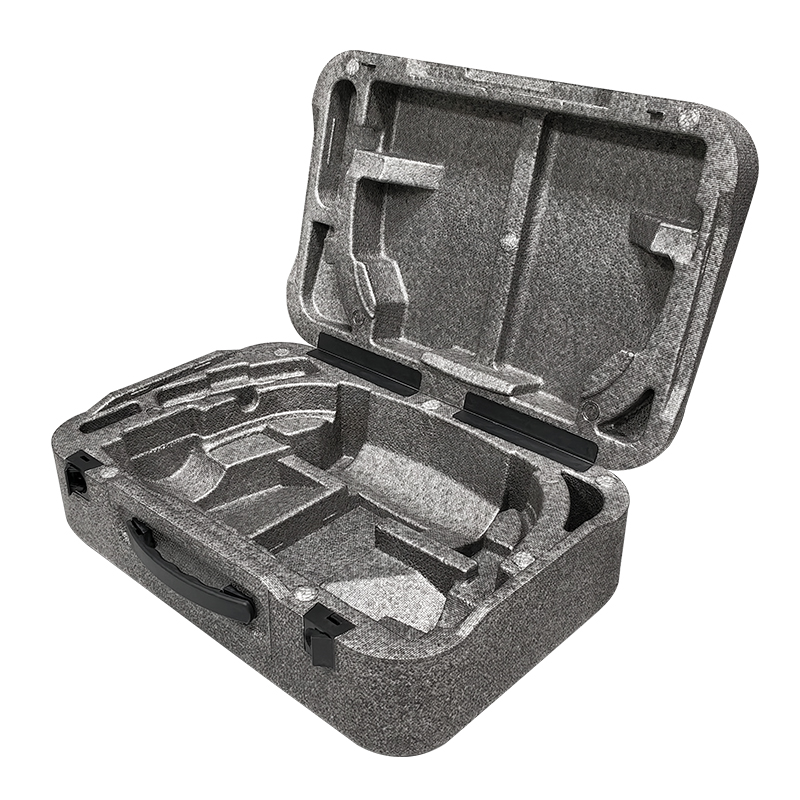
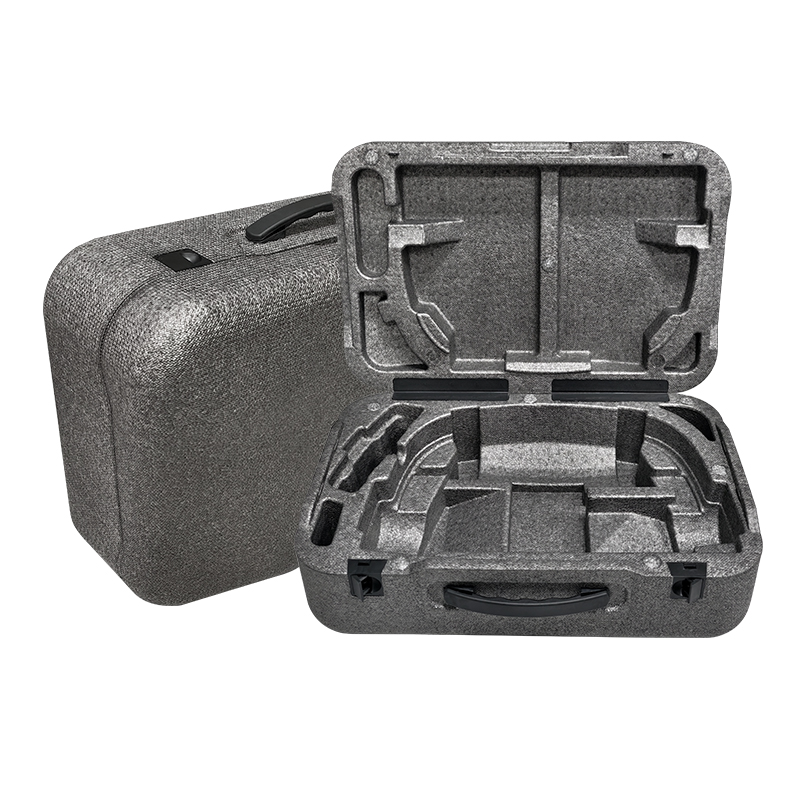
EPP packaging is designed to withstand dynamic impact, sustained stacking load and repeated reuse. Static matching is only the baseline. EPE and bonded EVA foam can also be made to fit neatly, yet their cushioning decays rapidly after several drops and stacking cycles. For reusable EPP packaging, real performance is verified via a complete reliability suite, mainly drop test, vibration test and cyclic compression ageing, together with temperature-humidity cycling and ESD sampling.
Drop Test: Simulate accidental impact during handling and loading Drop testing follows defined logistics standards rather than uncontrolled free fall. Drop height, orientation and impact surface are set based on instrument weight, gross package weight and export requirements. The box is dropped on corners, edges and faces sequentially. Engineers monitor peak acceleration transmitted to fragile components such as lenses, sensors and PCBs.
Pass criteria do not require the EPP box to remain unbroken. The core target is keeping shock acceleration below the component’s damage threshold. Some stiff EPP prototypes show no visible marks after drop, yet internal acceleration spikes can cause hidden damage to lens coatings and chips. Low-density EPP also risks hard bottoming out if cushion stroke is poorly designed. For zoned multi-density EPP, targeted drop tests on lens cavities are mandatory, not only whole-unit drop tests.
Random Vibration Test: Replicate bumpy road transport and ocean freight sway Trucks and sea containers expose packages to continuous random vibration, different from fixed-frequency shaking. Prolonged vibration brings two major risks: micro movement and friction between instrument and foam, scratching lenses or loosening fasteners; material fatigue that gradually degrades EPP resilience.
Vibration testing applies road and ocean freight vibration spectra over a set duration. Inspectors check for positional drift, cracked ribs and cushion degradation after testing. Single-use foam often fails after extended vibration, while qualified EPP maintains geometry and cushioning for repeated circulation.
Cyclic Compression Ageing Test: Validate creep resistance under stacking load This test separates reusable EPP from disposable foam. Pallet stacking and container loading subject packaging to long-term static pressure. Although EPP performs far better than EPE/EVA against creep, poorly selected density or weak reinforcing ribs can still lead to permanent collapse.
Cyclic compression ageing applies constant stacking load for a holding period before unloading. Resilience recovery rate is measured to judge creep performance. High recovery means the EPP will not sag and loosen after repeated stacking cycles. This data underpins the estimated reuse cycle (50 / 80–100 times). This failure mode cannot be identified simply by inspecting static samples.
These core mechanical tests are often paired with environmental validation: thermal cycling and damp heat ageing replicate condensation and temperature swings inside shipping containers. Anti-static EPP requires surface resistance checks before and after ageing to confirm stable ESD performance. Dust-free textured EPP undergoes friction dusting tests to ensure no particle shedding for cleanroom workflows.
A common misunderstanding: reliability testing is not intended to destroy packaging. It reveals structural weaknesses hidden under static conditions: incomplete bead filling causing soft zones, thin ribs with stress concentration, weak knit lines between different densities, or residual stress from poor draft angle design. Defects of this kind usually only emerge under drop, vibration or compression load. Skipping testing before mass production leads to costly mold revisions, delayed shipments and customer claims.
Test protocols should match actual application scenarios instead of over-specifying. Domestic one-off shipments may adopt simplified test plans. High-value optical instruments, overseas export and recurring repair circulation require the full test suite, with reports available for downstream quality and ESG audits.
Multi-functional EPP combining zoned density, anti-static treatment and mold texturing demands more granular testing. Each functional zone is sampled separately, not only the main housing. Lens soft zones are checked for shock absorption, while electronic anti-static zones are verified for stable resistance after ageing. Failure in one local zone compromises the whole packaging solution.