Blog
Oct. 12, 2026
Share:
High-value precision optical equipment, testing instruments and industrial sensors require reliable protection during shipment and in-plant turnover. Material choice of precision instrument cushion packaging directly affects product yield. EVA foam and EPE foam are widely used, but for high-end cleanroom and repeated circulation scenarios, more engineers choose EPP insert as the top option. We mainly introduce EPP properties and compare EVA and EPE foam for your reference.
Expanded Polypropylene (EPP): Mainstream high-end packaging material for precision instruments EPP is closed-cell expanded polypropylene made by steam molding, the core cushion material recommended by Fumei New Materials for precision instrument packaging.
Firstly, excellent resilience and impact resistance, no permanent deformation. After impact or stacking pressure, EPP bounces back quickly. Unlike EPE and EVA which collapse permanently, its cushioning performance stays stable after dozens of reuse cycles, ideal for reusable containers and repeated shipments of precision instruments.
Secondly, high cleanliness. Mold-textured EPP eliminates dust risks. Plain EPP has natural bead texture. With mold texturing technology, matte fine grain is formed during molding. No film lamination, painting or adhesive is needed. The base material hardly sheds debris under friction, avoiding glue or film particles. It meets cleanroom requirements for optical lenses and circuit boards and reduces dust contamination at source.
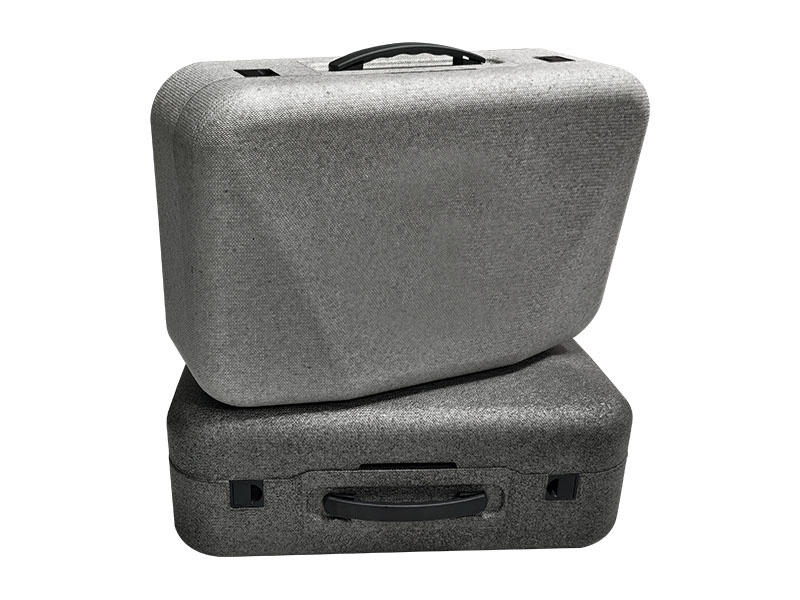
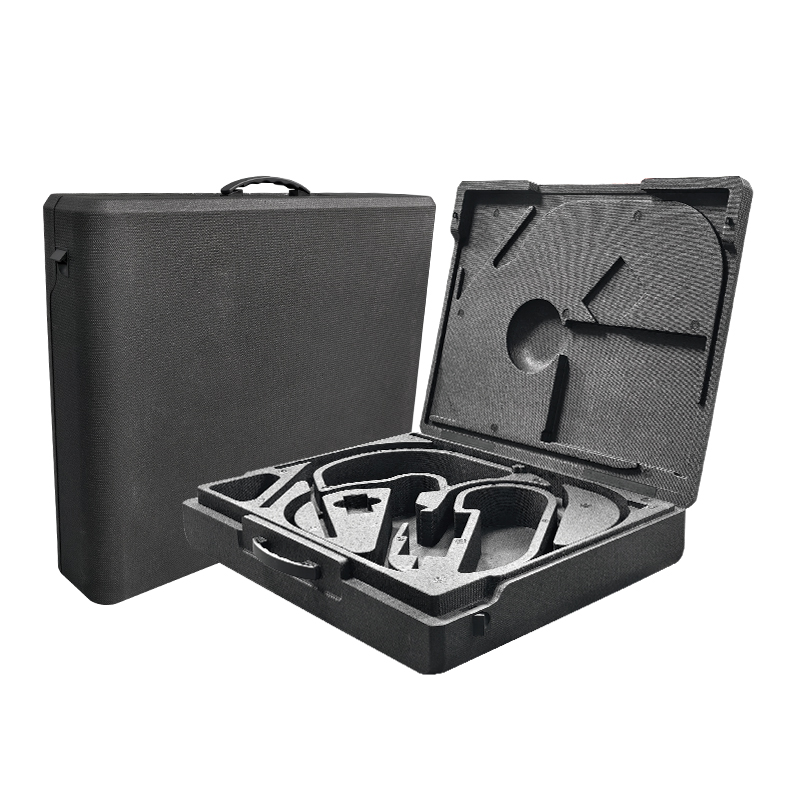
Thirdly, complex multi-cavity structures can be integrally molded for precise positioning. Supported by our in-house mold workshop, irregular grooves, limit slots and multi-layer cavities can be formed in one step. Instruments and accessories are fixed separately to prevent shifting and friction in transit. High dimensional accuracy and consistent quality for mass orders.
Fourthly, stable physical and chemical properties, wide temperature resistance, moisture and aging resistance. Anti-static modified EPP is available for electrostatic-sensitive precision electronic components.
EPE Foam: Only for simple one-time packaging EPE foam is low-cost with fast sampling. However, it is made of bonded beads, easily shedding granular debris after repeated friction, creating dust hazards. It collapses permanently under pressure with fast loss of cushioning performance. It is only suitable for one-time shipment and not for long-term circulation of optical precision instruments.
EVA Foam: Suitable for simple small-batch inserts, not for long-term reuse EVA is processed by cutting and grooving sheets with flat surface. But permanent deformation occurs under long-term compression, weakening shock absorption. Conventional EVA generates fine dust under friction.
Adhesive-backed EVA may peel and release volatile substances under heat and contaminate precision components. Complex multi-cavity inserts cost much more to cut. It cannot be integrally molded and is not cost-effective for mass production.
As a Dongguan-based EPP manufacturer with in-house mold workshop, Fumei New Materials specializes in EPP packaging for precision instruments. We customize multi-cavity EPP inserts and textured EPP boxes. Sampling and mass production are available. Contact us for sample testing and packaging design evaluation if you need cushion packaging for precision instruments.