Blog
Nov. 16, 2026
Share:
Ordinary EPP liners and textured boxes only provide cushioning protection. For high-end instruments and portable equipment, customers require copper nuts, metal sleeves or plastic brackets embedded into EPP during molding, so the finished part can be assembled directly without adhesive. This is EPP insert molding, one of the most challenging bead foam processes.
In the early R&D stage, our team faced typical difficulties: bead expansion force shifts inserts during steaming; weak bonding between insert and EPP leads to detachment; trapped air creates voids around inserts; and texture finish may be broken near embedded areas. The old workaround was separate molding plus glue assembly, which ages easily under temperature cycling and is risky for export reusable packaging.
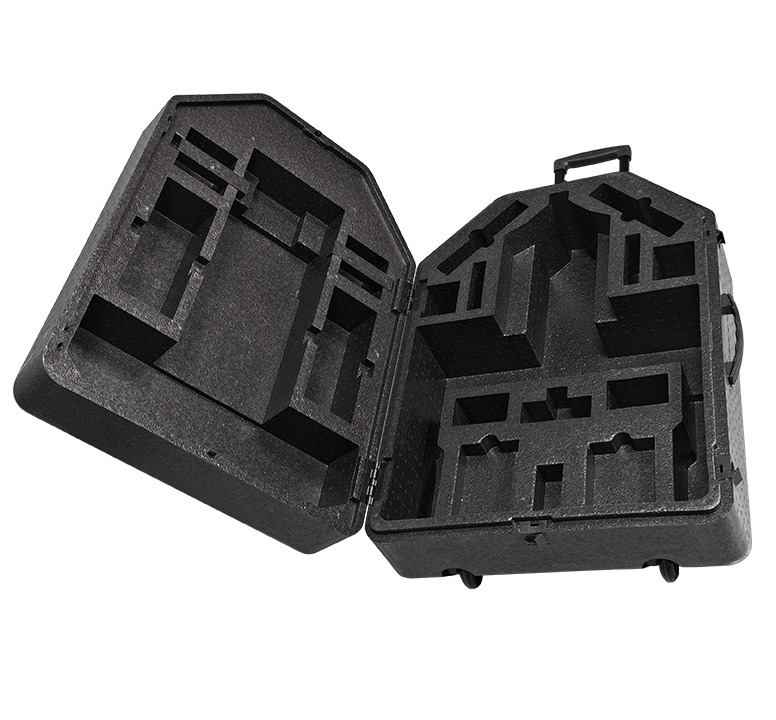
Our mold, process and testing engineers optimized positioning fixture, bead pre-expansion ratio, steam timing and cooling cycle:
After repeated sampling, pull testing and thermal cycling aging, the EPP insert molding process is ready for mass production. Inserts are fused with EPP matrix without glue or secondary assembly. Textured finish, anti-static modification, variable density and undercut hollow structures can be integrated in one part.
✅ Supported inserts: copper nuts, stainless steel sleeves, plastic clips and locating inserts
✅ Compatible processes: surface texture, anti-static modification, multi-density design, undercut
✅ Typical products: EPP premium cases, EPP carry boxes, instrument liners, energy storage support structures
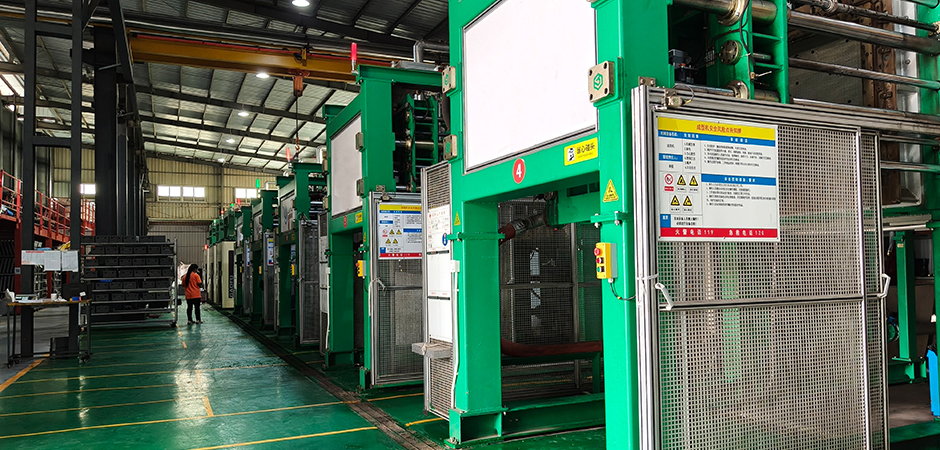
With our 20,000 ㎡ plant, in-house mold workshop, automatic molding lines and independent test lab, we provide full service: 3D review, insert design simulation, mold making, sampling, pull/drop/aging test, pilot run and mass delivery. We also support cross-material comparison among EPP, ETPU and MPPE. For flame-retardant insulating structures, MPPE high-performance flame-retardant foam is available; for tough elastic goods, we offer custom ETPU products and ETPU pet toys.
One project case: an optoelectronic instrument customer originally used separate EPP liner plus metal brackets, with complicated assembly and low yield. We adopted EPP insert molding, embedding lock nuts directly inside the textured EPP case. The integrated design removes gluing work, withstands repeated disassembly and overseas reliability audit, and has become a recurring order.
EPP insert molding is a synergy of structural design, mold making and foam process. Fumei specializes in challenging EPP customization, including textured EPP packaging boxes, premium EPP cases, EPP carry boxes and insert-bonded structural liners. Send your drawings or samples for technical evaluation and sample review.