Blog
Oct. 29, 2026
Share:
For exported optical, laser and inspection instruments, the supply chain covers domestic loading, long ocean transit, overseas warehousing and last-mile distribution. Shipping containers create harsh microclimates: sharp day-night temperature swings, heavy condensation and salt-laden air along coastal routes. Many foam solutions pass room-temperature drop tests yet fail at sea: they turn brittle in cold, soften and collapse in heat, absorb moisture and grow mold, losing cushioning function and putting lenses, circuit boards and sensors at risk. This pushes export-focused manufacturers to prioritize weather stability when selecting protective packaging.
Compared with EVA, EPE and EPS foam, one of the core merits of integrally molded EPP is that its cushioning performance is far less sensitive to temperature and humidity changes. Virgin closed-cell EPP works steadily from approximately -40℃ up to 110℃. It will not stiffen rapidly and crack under low temperature like EVA, nor creep and deform permanently under sustained high heat. Whether transported through frigid regions, cold chains or tropical shipping lanes, EPP retains resilience, preventing validated packaging designs from failing purely due to ambient temperature shifts.
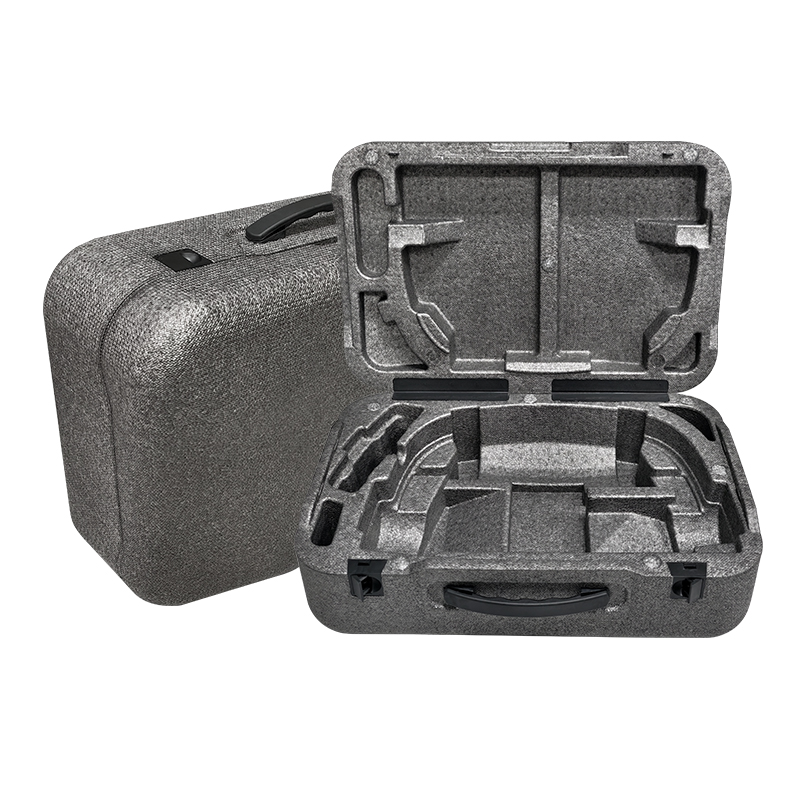
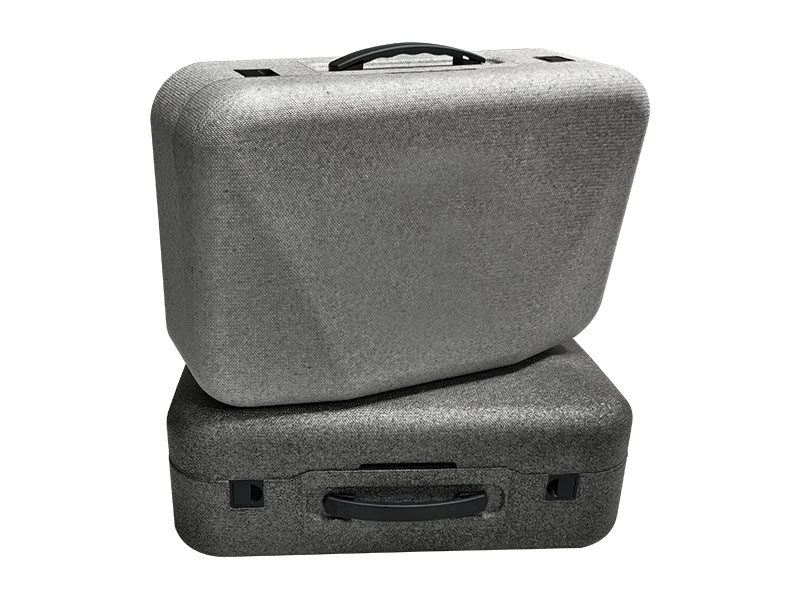
Low water absorption is critical for sea freight. EPP features fully closed independent cells that block water from penetrating deep into the material. In contrast, open-cell or bonded EVA and EPE easily soak up and trap condensed moisture. Trapped dampness inside sealed containers accelerates mold growth, coating corrosion and oxidation of electronic components.
It is important to clarify that EPP is not fully waterproof when submerged. Its advantage is that it does not hold moisture. Surface condensation can be wiped away without permanent damage. Mold-textured EPP boxes eliminate laminated films and adhesive interlayers, removing common failure points such as peeling, bubbling and water trapped between layers, which fits cleanroom and export requirements for optical devices.
Stable dimensional performance is another easily overlooked point. Conventional composite foams expand and shrink noticeably with humidity and temperature, shifting cavity tolerances. Parts that fit tightly at room temperature may rattle loose in hot containers or jam during cold delivery. Integrally molded EPP has controlled shrinkage, so the fit between box and internal locating structure stays consistent across typical shipping temperature cycles.
Even multi-density zoned EPP maintains uniform weather resistance across soft lens zones and rigid support zones. There is no mismatch of thermal stability between different cushioning areas, and fewer dissimilar foam materials are stacked together, avoiding misalignment caused by uneven thermal expansion.
Still, EPP weather resistance has boundaries. Pure PP substrate resists salt spray, yet metal latches, hinges and fasteners are vulnerable to corrosion. For heavily salt-exposed routes, stainless steel hardware and water-draining structural design are recommended to complement the EPP box.
For short domestic shipments with single-use packaging, conventional foam remains cost-competitive. The return on EPP’s weather stability becomes obvious for long ocean routes, cross-climate logistics, long-term overseas storage and recurring repair shipments. Qualified suppliers run thermal cycling and damp heat aging tests to simulate container conditions, instead of only carrying out room-temperature drop validation.
Q1: Does EPP lose cushioning performance in sub-zero transport?
A: Virgin EPP retains elasticity at low temperatures and resists brittle fracture, outperforming EVA which hardens and cracks easily in cold environments.
Q2: Can EPP packaging withstand salt spray directly?
A: The EPP material itself is salt-spray resistant, while metal fittings corrode easily. Stainless hardware is recommended for coastal shipping lines.
Q3: Can EPP fully protect instruments from condensation at sea?
A: EPP resists absorbing moisture but cannot block water vapor. Desiccants and barrier bags are normally used together for moisture-sensitive optical parts.
Q4: Will textured EPP peel or shed dust after long sun exposure?
A: Texture is etched into the mold with no sprayed or laminated coating. It will not delaminate or generate dust under high temperature, suiting both cleanroom and hot sea freight scenarios.
For manufacturers selling globally, export packaging must deliver consistent protection beyond controlled lab environments. Reliable weather resistance allows reusable EPP packaging to keep its cushioning function amid fluctuating container conditions and reduce shipping risks. Fumei New Materials customizes EPP packaging for export routes and conducts reliability tests including thermal cycling, damp heat, vibration and drop. Solutions including dust-free texture, anti-static treatment and multi-density zoning are available for optoelectronic and testing equipment circulating overseas.