Many engineers and buyers in new energy industry have heard about MPPE foam with UL94 V-0 rating, but do not fully understand the test criteria. They often confuse MPPE with ordinary EPP foam. Although both are bead-molded foam, their base material and flame-retardant mechanism are different.
Standard EPP does not come with V-0 flame resistance; flame retardancy is usually achieved by adding extra flame retardants. MPPE (modified PPE bead foam) is inherently halogen-free flame retardant from raw material modification, and reaches UL94 V-0 after molding, which makes it a popular choice for insulation and buffer parts in high-voltage new energy equipment.
1. What is UL94 V-0?
UL94 is the vertical burning standard for plastic and foam materials. V-0 is a high flame-retardant grade with these requirements:
- The sample is clamped vertically and exposed to controlled flame twice for 10 seconds each. It must self-extinguish within 10 seconds after each flame removal.
- Total burning time of five specimens shall not exceed 50 seconds.
- No flaming drips are allowed; dripping particles must not ignite the cotton indicator below.
- Flame cannot spread all the way to the top clamping fixture.
Two important clarifications:
✅ V-0 rating is tied to the tested thickness. A V-0 certificate for one thickness does not guarantee V-0 for thinner sections.
✅ V-0 does NOT mean the material is fireproof. It can stop small ignition sources and slow flame spread, but it cannot withstand high-temperature jet flame from battery thermal runaway. Do not overstate its performance.
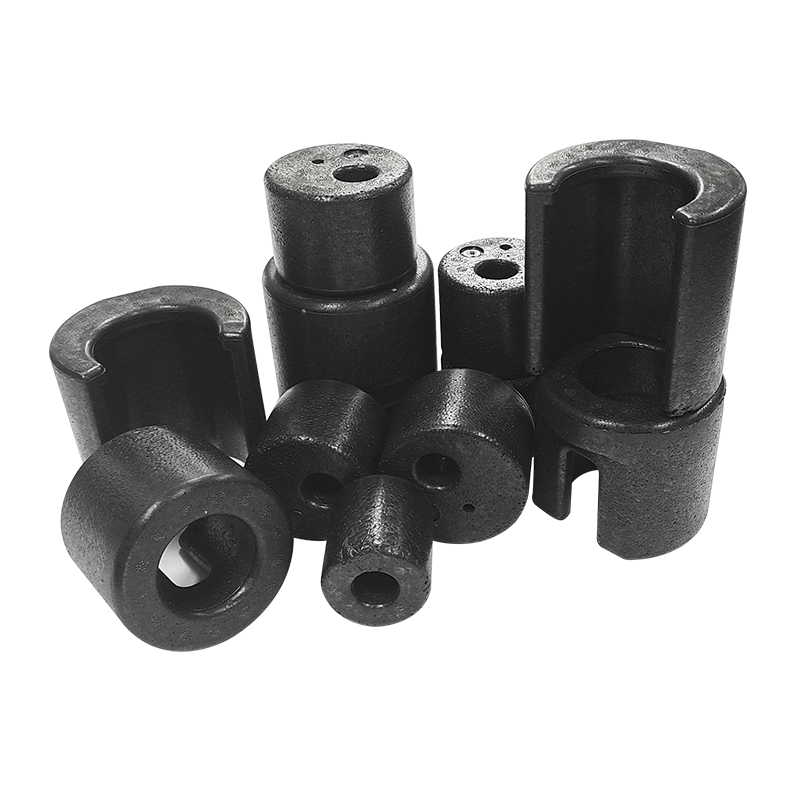
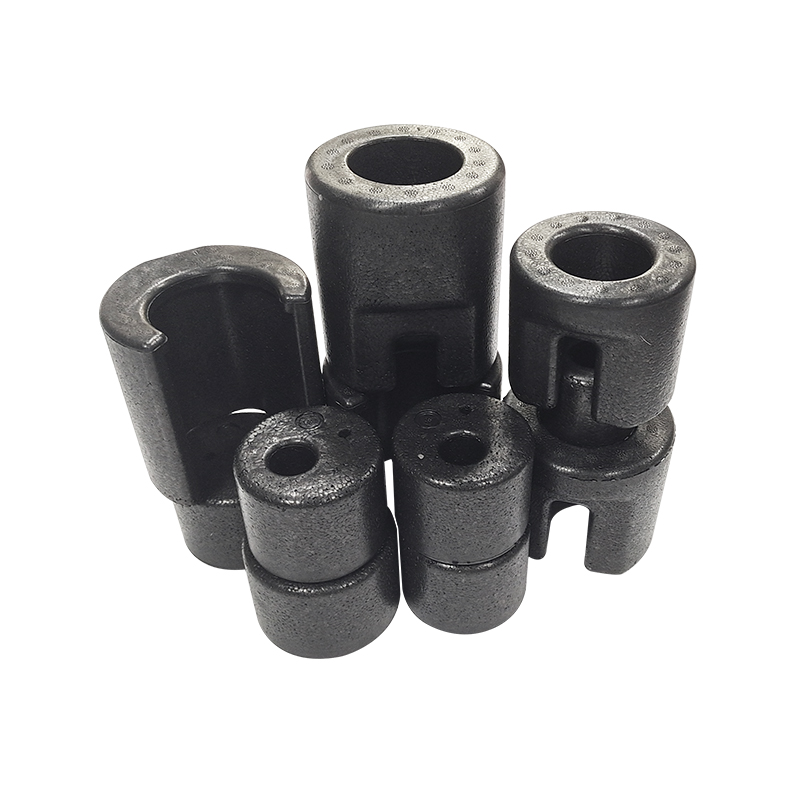
MPPE’s biggest advantage is intrinsic flame retardancy. The flame-retardant property is built into the molecular structure instead of a surface coating. Even after repeated friction and circulation, flame resistance will not fade quickly like coated foam. It is halogen-free, low-smoke and compliant with RoHS and REACH for export.
2. New Energy Application Scenarios for MPPE Foam (Available at Fumei)
- Isolation buffer pads and thermal insulation liners for power battery modules
- Insulation buffer parts inside charging piles and high-voltage control boxes
- Protective foam inserts for energy storage battery turnover packaging
- Buffer and insulation components for high-voltage electrical and power modules
It supports complex contoured one-piece molding, as well as CNC machining for prototype verification. Our workflow is the same as EPP customization: requirement communication → drawing design → CNC sampling → mold making → mass production → QC → packing & shipment → after-sales service.
3. Key Selection Guidelines for New Energy Buffer Parts
- Verify flame-retardant method: intrinsic modification or surface coating Some low-cost foam products only apply flame-retardant paint on the surface. Once scratched or worn, flame resistance fails. For battery and high-voltage projects, confirm it is intrinsically flame-retardant MPPE, and check the UL yellow card and test report to match the thickness, density and color of your actual parts.
- Match density and compression performance to working conditions MPPE density can be adjusted. Different densities show different hardness, cushioning and thermal insulation:
- Low density: soft, good shock absorption for spacing between cells
- High density: higher rigidity, stable dimension for long-term compression and module positioning Do not only focus on flame rating. Check compression set and compressive stress to avoid permanent collapse after long-term loading.
- Confirm temperature resistance range MPPE has better heat resistance than EPP, but it still has an upper temperature limit. For continuously high-temperature environments, carry out thermal aging tests before formal adoption.
- Structural design rules: wall thickness, draft angle and fillet MPPE has a narrower molding window than EPP. Thin walls, sharp corners and thin ribs are prone to molding defects. Send drawings to our engineering team for review at early design stage.
- Compare with EPP and select properly
- EPP: cost-effective, good shock absorption, no native V-0 flame retardancy; suitable for instrument packaging, drone inserts
- MPPE: native V-0 flame retardancy, insulation and better heat resistance, higher cost; only recommended when V-0 is mandatory for high-voltage new energy parts If flame retardancy is not required, EPP is preferred for pure shock protection.
- Reserve separate lead time for third-party testing Most new energy projects require tests for flame resistance, insulation and aging. Test time is separate from mold and sampling lead time.
4. Limitations of MPPE Foam
- MPPE material cost is much higher than standard EPP. Not recommended if V-0 is not required.
- UL94 V-0 only works for small ignition sources; it cannot block high-temperature flame from battery thermal runaway.
- Limited color options, mainly black and white. Texture molding and gradient printing are not supported.
- Molding tuning is more difficult than EPP, so tooling and sampling cycles are longer than simple EPP liners.
Summary
UL94 V-0 means the material can self-extinguish quickly without flaming drips, which is a basic safety requirement for many high-voltage battery buffer parts. The selection logic: confirm whether V-0 is mandatory, verify certificate thickness, density, compression property and temperature condition, then check molding feasibility.
Fumei New Materials provides custom molded MPPE foam. We support CNC rapid prototyping and supply UL, RoHS, REACH documents for energy storage, power battery and charging pile projects. Send your drawings for technical evaluation, lead time and budget assessment.